
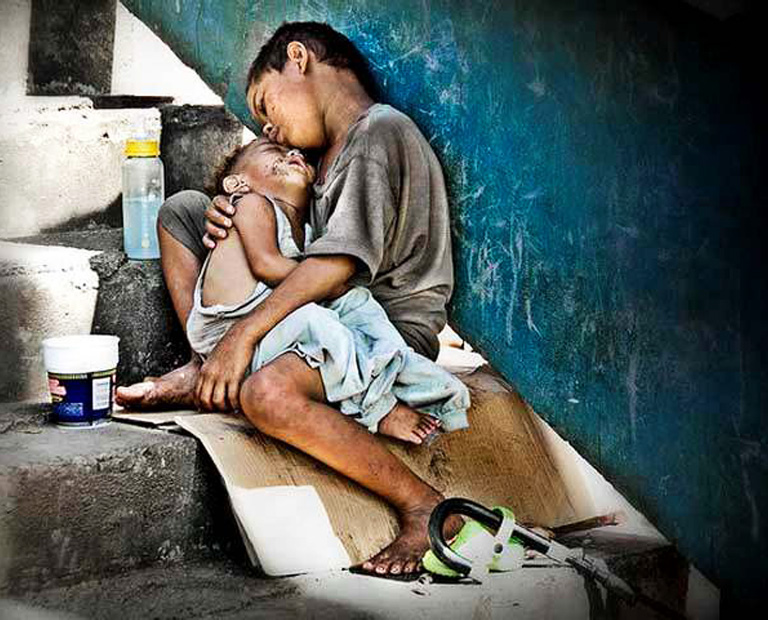
Poverty Crises
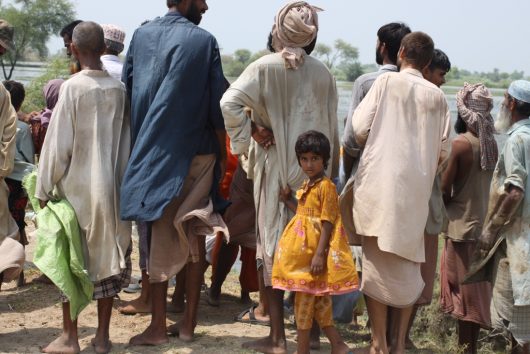
While Pakistan is one of the richest countries in Asia, poverty in Pakistan is a fact of life for most of its people. The main cause of Pakistan’s poverty rate is the fact that many Pakistanis lack basic human rights. Many Pakistanis, often women and children, are begging in the streets throughout their country.
These are the top 10 facts about poverty in Pakistan:
- In June 2016, the Ministry of Planning, Development and Reform reported that 39 percent of Pakistanis lived in multidimensional poverty. Pakistan’s official Multidimensional Poverty Index revealed that national poverty rates fell from 59 to 39 percent between 2004 to 2015. Additionally, poverty in Pakistan’s urban areas was 9.3 percent, a large contrast from the 54.6 percent in the country’s rural territories.
- On Dec. 19, 2016, Pakistan signed an aid partnership program with Australia. The program is intended to reduce Pakistan’s poverty and enhance the country’s stability, reflecting Australia’s commitment to support Pakistan’s economic prosperity. Australia’s government is also providing AUD47 million in total development assistance to Pakistan.
- Many Pakistanis live in poverty because the country’s wealth is often concentrated among a few rich families. The remainder of Pakistan’s impoverished citizens are dependent on the wealth of those families, resulting in 35 percent of Pakistanis living below the poverty line. Additionally, Pakistan’s corporations, landlords and wealthy entities pay less taxes, leaving Pakistan’s poor citizens to pay more taxes in their place.
- Poverty is the primary reason for Pakistan’s rate of child labor. Out of 40 million Pakistani children, 3.8 million work to support their families. Additionally, almost 11 million of those children work in factories under hazardous conditions. Child labor is still a large cause of poverty in Pakistan because while the country has passed many laws against child labor, those laws have often remained ignored.
- In February of 2017, Pakistan achieved a burgeoning middle class capable of fueling the country’s economic growth. Jamil Abbas, a Pakistani tailor of women’s clothing for 15 years, could finally afford private schooling for her two children. Other impoverished Pakistanis who rise to middle-class status are now able to afford a television, a refrigerator, a washing machine and have completed school up to the age of 16.
- Sixty percent of Pakistanis struggle to find food to eat. Pakistan’s women and children are the most affected by this type of poverty. On August 11, 2017, USAID’s Office of Food for Peace fact sheet revealed that $38 million was contributed to the U.N. World Food Programme for ongoing food aid to 1.6 million conflict-affected Pakistani households.
- In Nov. of 2017, the five-year Programme for Poverty Reduction (PPR) had given productive assets to 5,049 Pakistanis. PPR’s objective is to reduce the poverty of Pakistan’s marginalized communities. “We aim to do this by supporting the creation of sustainable conditions of social and economic development, including income and production capacity increase in programme areas,” said Dr. Santa Mole, the director of the Italian Agency for Development Cooperation.
- On Nov. 11, 2017, the Local Government and Rural Development Department (LG&RDD) launched a $52.4 million project to reduce poverty in Balochistan, Pakistan. Funded by the European Union, the LG&RDD project will be implemented in Jhal Magsi, Kech, Khuzdar and other districts. The project’s main focus is to support the Balochistan government in reducing the impact of economic deprivation, poverty and social inequality.
- In Dec. of 2017, the Asian Development Bank (ADB) pipeline for 2018 to 2020 included a plan to offer $2 billion per year to Pakistan. ADB intends to work with the Central Asia Regional Cooperation (CAREC) to fulfill this goal. “By cooperating and working together with other CAREC member countries, Pakistan can better unlock its vast economic potential,” said Xiaohong Yang, ADB’s country director.
- The circumstances described in these facts about poverty in Pakistan often lead to terrorism throughout the country. In Dec. of 2017, the China Pakistan Economic Corridor completed the construction of a northern Pakistan highway that will play a role in alleviating the country’s poverty. The highway will help eradicate rampant terrorism and provide cost-effective transportation to millions of Pakistanis in local towns and valleys.
USAID, LG&RDD and other entities will continue making efforts to financially help Pakistan’s impoverished citizens. However, the country’s divide between poor and rich citizens remains the main contributor to poverty in Pakistan. Further work will continue to ensure that all Pakistanis can live financially secure lives.
– Rhondjé Singh Tanwar
Photo: Flickr
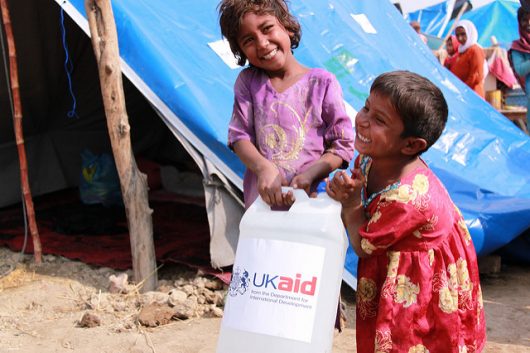 Pakistan is among the poorest nations in the world. However, it is also oxymoronically rich in natural resources: “the country has the second largest salt mine in the world, fifth largest gold mine, seventh largest copper mine, fifth largest coal reserves, seventh largest wheat and rice production capacity…” and the list goes on. But does it really matter when almost 40 percent of the people live in extreme poverty? The Human Development Index ranks Pakistan 147th out of 188 countries for 2016. According to several reports, there are a number of reasons why Pakistan is poor, even though it is rich in resources and has the potential to grow. Why is Pakistan poor? Discussed below are the three leading reasons.
Why is Pakistan Poor?
Corruption and Elitism in the Government
First is the fundamental flaw in Pakistan’s political system. Politics in Pakistan have always been dominated by the elites. These elites comprise politicians, generals and bureaucrats (the ruling oligarchy). Many politicians come from large land-owning families or very rich industrial backgrounds. They share key common interests and together look after each other, neglecting common people’s interests.
This scenario has become cyclical because most people vote according to what these elites deem convenient. This type of political culture may be changing with education and emerging democratic norms in the recent past, but it has affected the country for a long time.
The elites in Pakistan are also involved in corruption. The current Prime Minister stepped down in July 2017. He did so because the Supreme Court ordered his removal on accusations of corruption. Additionally, Transparency International ranks Pakistan as one of the worst countries for corruption.
Why is Pakistan poor? Corruption prevents any real change from occurring.
Lack of Democratic Ideals
Second is the absence of real democracy. Democracy remains an illusion for many due to “the lack of proper, meaningful and non-discriminatory representation for all regions in decision-making.” The absence of democracy and lack of political development in Pakistan are a consequence of direct and indirect military rule.
The military has dominated politics from the early years of the country’s independence because it was the most powerful and organized institution. Coupled with that, the military presented itself as Pakistan’s protector against India, which is considered an existential threat to Pakistan’s survival. One analyst writes, “It is little wonder, then, that Pakistan became a national security state during its early years, subordinating economic and democratic development to military improvement and tilting the balance of power away from civilian rule.”
Why is Pakistan poor? A lack of democracy in the nation prevents citizen-oriented development.
Both Religious and Secular Conflict
Furthermore, empowering Islam over secular ideals in a country which is much more diverse culturally by the military establishment, has not only created a fictitious national unity but stunted even further, the democratic and economic development.
The use of religious proxies against Bengalis dates back to 1971, then in Afghanistan against the Soviets during the 1980s. Additionally, their alleged involvement in Afghanistan for countering India in the past two decades, have brought home only conflict and violence.
In Pakistan’s context, violent conflicts and pervasive poverty are very much interlinked. Unfortunately, extreme poverty motivates the country’s disaffected youth to join forces with terrorist organizations which desire to establish the Sharia rule in Pakistan.
Why is Pakistan poor? Religious and secular violence plague the nation.
Education Crisis
The desperate education crisis is another answer. As of 2015, Pakistan spends only 2.6 percent of total GDP on education, which is the lowest in South Asia. In 1997, it was 3 percent, the highest in the country’s history. As a consequence of this low expenditure overall, more than half of the country’s population is uneducated. And hundreds of thousands of poor children are out of school.
In contrast, the country spends the largest part of its national expenditures on defense. A May 2017 report shows that “Pakistan’s defense expenditure in the next financial year (2017-18) will be around 7 percent higher than it was in the outgoing year to Rs920.2 billion (USD$8.65 billion).” It was Rs841 billion (USD$7.9 billion) for the year 2016-2017.
Why is Pakistan poor? The nation invests more in present conflicts than development towards a better future.
However, there is pleasant news. Poverty in Pakistan has fallen from 54 percent to 39 percent in the past decade—a 15 percent drop. The deaths from terrorist incidents have also declined recently. Today, 47 percent of Pakistani households own a washing machine; in 1991, only 13 percent owned one. Nonetheless, there is more work to be done to improve the lives of people in the context of global development.
– Aslam Kakar
Photo: Flickr
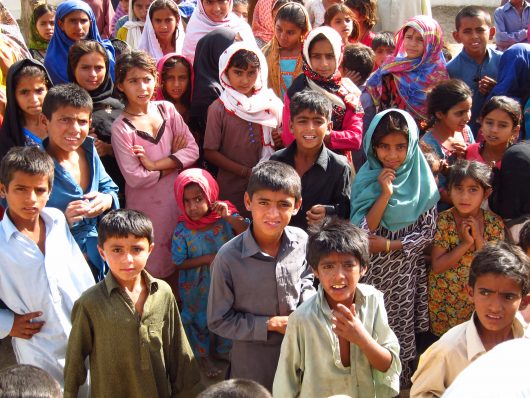
Poverty is a global affliction affecting numerous countries in the developing world. Pakistan, a country in South Asia, is home to millions of people who live in extreme poverty. Poverty in Pakistan is on track to decrease, but there is still work to be done.
With approximately 185 million citizens, Pakistan ranks 147th out of 188 countries in the Human Development Index (HDI). Reports on poverty in Pakistan show that as much as 40% of the population–roughly the size of the population of Florida, California and New York combined–live beneath the poverty line.
The Multidimensional Poverty Index (MPI) report by the Pakistan Ministry of Planning, Development and Reform in June 2016 shows that 39% of Pakistanis live in multidimensional poverty. The MPI methodology, developed by UNDP and the Oxford Poverty and Human Development Initiative in 2010, uses a broader concept of poverty by reflecting people’s deprivations related to health, education and standard of living in addition to income and wealth.
1. Regional and Provincial Disparities in Poverty in Pakistan
The report states that national poverty rates in Pakistan fell from 55% to 39% from 2004 to 2015. This is a strong decline; however, development across different regions of the country is uneven. Poverty in urban areas is at 9.3% as compared to 54.6% in rural areas. Similarly, great disparities exist across provinces, with the highest rates of poverty in the Federally Administered Tribal Areas (FATA) and Balochistan. The MPI report states that “over two-thirds of people in FATA (73%) and Balochistan (71%) live in multidimensional poverty. Poverty in Khyber Pakhtunkhwa stands at 49%, Gilgit-Baltistan and Sindh at 43%, Punjab at 31% and Azad Jammu and Kashmir at 25%.”
Some districts such as Qilla Abdullah, Harnai and Barkhan in Balochistan have more than 90% poverty compared to Islamabad, Karachi and Lahore, in which less than 10% of residents live in multidimensional poverty. The report also found that the decrease in multidimensional poverty in Balochistan was the slowest while poverty levels had actually increased there and in Sindh province in the past decade.
2. Corruption in Pakistan
Despite being the second-largest economy in South Asia, development is limited by entrenched poverty in Pakistan, social inequality, lack of access to social services and extreme corruption. The 2016 Corruption Perceptions Index by Transparency International ranks Pakistan 116th globally. Corruption in Pakistan is not a new phenomenon. Recent Panama leaks involving the Pakistani Prime Minister Nawaz Sharif’s three children are just one example: they owned offshore companies and assets not shown on his family’s wealth statement. This and other cases of corruption by political and military elites have made it impossible to alleviate widespread poverty.
3. Population Boom
Burgeoning population growth is another major issue that weighs down Pakistan’s socio-economic development. According to some reports, in the past 10 to15 years, the population of Pakistan has grown by more than 40 million, making it the sixth most populous country in the world. Another report found that Pakistan’s population increases by 1.8% per year. By that rate, it is feared that, if the nightmarish growth goes unchecked, the country’s population will be 245 million by 2030.
4. Development and Conflict
Pakistan is caught between the United States’ War on Terrorism in Afghanistan and an increasingly unstable relationship with India. Tackling poverty is important because economic instability and a lack of development can only lead to conflict and violence, domestically and regionally. In the past two decades, Pakistan has seen increasing violence at the hands of militant jihadists and Baloch insurgents. Rather than bettering the lives of common people by introducing broad-based socio-economic reforms, the Pakistani state uses excessive military force to “resolve” issues in the country’s northern and southwestern regions. Unending conflicts are another reason why it is difficult for development to take place.
5. Disproportionate Defense Spending
Most importantly, instead of allocating sufficient funds to address both acute and long-standing poverty, the country spends the largest amount of national expenditures on defense. A May 2017 report showed that “Pakistan’s defense expenditure in the next financial year (2017-18) will be around seven percent higher than it was in the outgoing year to Rs920.2 billion (USD$8.65 billion).” It was Rs841 billion (USD$7.9 billion) for the year 2016-2017. In contrast, Pakistan spends only 2.6% of its GDP on education, which is the lowest in South Asia.
6. Consequences of Poverty in Pakistan
Grinding poverty and lack of development fuel child labor, illiteracy, religious extremism and endless conflicts on massive scales. The Gross National Income per capita is only $5,031. Life expectancy in Pakistanis at 66.4 years and the expected years of schooling is miserably low at 8.1 years. These figures are among the lowest in the world.
The good news is that poverty in Pakistan decreased by 15 percent in the past decade, but, given the grim lows overall, this figure is less than encouraging. In order to alleviate poverty, policymakers need to focus on achieving the U.N. Sustainable Development Goals (SDGs) by 2030. Although it is a big challenge for an underdeveloped country like Pakistan, meeting the SDGs is important since they provide the best possible integrated way for inclusive growth, peace and development.
Finally, policymakers should also focus on addressing the poverty of opportunity. The poverty of income is a result of the poverty of opportunity. Poverty in Pakistan is a multidimensional problem requiring multidimensional solutions.